Atlantic Immigration Program Francophone Advantage 2026: Designated Employers & Cross-Province PR

Francophone Pathways · Part 10 · Francophone Pathways · Part 10 — Atlantic Immigration
A VG Immigration series on French-speaking immigration routes to Canada. View all posts in the series →
Reach Newcomers to Canada
Banks, insurance, real estate, tax & accounting, telecom, healthcare & education. Ask about relevant native in-article placements.
Contact Us →By VG Immigration Services Inc. (RCIC-IRB)
Published June 18, 2026 · Updated for 2026 program instructions
Atlantic Immigration Program Francophone Advantage 2026: Designated Employers & Cross-Province PR
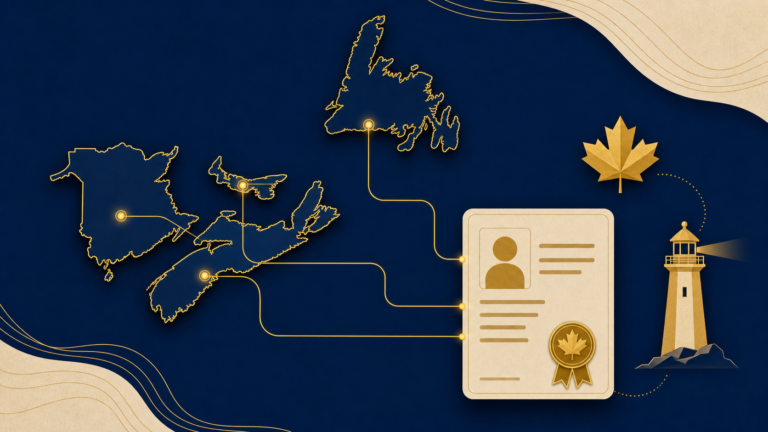
If you’re a French-speaking candidate trying to avoid the volatility of Express Entry, the Atlantic Immigration Program (AIP) is one of the rare pathways where employer demand can matter more than your CRS score. The catch is that the offer has to come from a designated Atlantic employer and be backed by a provincial endorsement before you submit PR.
In 2026, AIP processing has become a headline topic: reported IRCC processing estimates for new AIP PR files fell to 26 months (down from 38 months). That still isn’t ‘fast’, but it changes the math for many Francophone families—especially if you can secure an Atlantic job offer that aligns with your long-term plan.
Not sure if AIP fits your profile?
Start here: Answer a few questions and we’ll map the fastest Francophone-friendly pathway (AIP vs Express Entry French draws vs provincial streams).
Key Highlights at a Glance
- AIP is employer-driven: you need a full-time, non-seasonal job offer from a designated employer and a provincial endorsement before PR submission.
- Work experience standard: at least 1,560 hours of paid, non-self-employed work in the last 5 years (unless you qualify as an Atlantic international graduate).
- No CRS cut-off: unlike Express Entry French draws, AIP doesn’t rank you against the pool—your bottleneck is employer + endorsement capacity.
- 2026 watch-out: IRCC guidance emphasizes that if your job duties/TEER or employer changes after submission, you may need an updated endorsement to keep your PR file safe.
- Processing snapshot: industry reporting cites AIP processing estimates at 26 months as of June 8, 2026 (down from 38 months).
How AIP Works (Plain English)
Think of AIP as a three-part handshake: (1) a designated employer makes a qualifying offer, (2) the province endorses you based on that offer and your settlement plan, and (3) IRCC processes the PR application. In 2026, IRCC’s online instructions confirm AIP PR submissions are done through the PR Portal and use a defined document checklist and AIP forms.
| Step | What happens | Who does it |
|---|---|---|
| 1) Secure a designated employer offer | Full-time, non-seasonal offer in an eligible TEER category, plus the employer’s confirmation of designation and IMM forms. | You + employer |
| 2) Settlement plan + provincial endorsement | You connect with settlement services for a plan; the employer uses it to request an endorsement certificate from the province. | You + employer + province |
| 3) Apply for PR (online) | Submit AIP PR application through the PR Portal with forms (including IMM 0155 / 0157 / 5501) and supporting evidence. | You + IRCC |
Eligibility: What IRCC Actually Checks
1) Job offer must match your experience level (TEER alignment)
IRCC’s AIP guidance includes a TEER alignment rule: your qualifying work experience must be in the same TEER category as your job offer or higher. That’s why “any job offer” is not enough—you need a job offer that fits your background (or you need to qualify under the Atlantic graduate exemption).
2) Work experience: 1,560 hours in the past 5 years (unless you’re an Atlantic graduate)
AIP’s baseline work experience requirement is 1,560 hours of paid work (about one year full-time) accumulated over the last 5 years, worked over at least 1 year. IRCC also clarifies that volunteer/unpaid work doesn’t count and self-employment doesn’t qualify.
3) The PR application package is specific (and easy to mess up)
In 2026, IRCC’s PR application instructions for AIP list required forms including the AIP document checklist (IMM 0155), the AIP class form (IMM 5501) and the Offer of Employment form (IMM 0157), plus the settlement plan and proof of provincial endorsement.
Start your secure Immigration intake
Skip the back-and-forth. Complete a structured intake in 25 minutes. Reviewed by Dimple Verma, RCIC-IRB. No payment required to start.
What Changed in 2026 (And Why Francophones Should Care)
1) Processing-time reset: still slow, but strategically meaningful
June 2026 reporting indicates IRCC’s processing estimate for new AIP PR applications dropped to 26 months as of June 8, 2026 (previously 38 months). If you’re a French speaker weighing “wait for the next French draw” vs “lock in an employer route”, this makes AIP harder to ignore.
2) More clarity on mid-process job changes
AIP is employer-driven—so IRCC’s recent guidance focus on job changes is logical. Practically, it means you should treat your job offer, duties, and TEER as “core evidence” that must stay consistent from endorsement through decision. Build a plan for promotions, transfers, and employer restructuring before you submit PR.
3) The Francophone advantage is not a separate stream—but it’s real
AIP itself doesn’t award CRS points, but French speakers often benefit in Atlantic Canada through (a) higher employer demand for bilingual staff in healthcare, education, community services and tourism-adjacent roles, and (b) a stronger settlement narrative: proven language integration and community fit.
Ready to move from ‘research’ to a real PR plan?
Book a Consultation and we’ll build an AIP strategy: employer targeting, document timeline, and how to protect your file if your job changes mid-process.
AIP vs Express Entry French Draws vs PNP Francophone Streams
| Pathway | Best for | Main bottleneck | Core risk |
|---|---|---|---|
| AIP (Atlantic) | Candidates who can secure an Atlantic job offer and want a non-CRS route. | Finding a designated employer + provincial endorsement capacity. | Job change mid-process may require updated endorsement; weak documentation leads to rejection. |
| Express Entry (French category) | High-skill profiles with strong NCLC + good CRS who can wait for rounds. | CRS cut-offs fluctuate; pool competition. | CRS drop or category volume shifts can delay ITA. |
| Provincial Francophone streams | Those with province-specific ties or in-demand roles (Ontario, Alberta, etc.). | Intakes can be unpredictable and criteria can change mid-year. | Missed windows; employer restrictions; nomination quotas. |
What This Means for You (Practical Strategy)
- Start with the employer list. AIP starts with designation. Don’t spend weeks negotiating with an employer who can’t participate.
- Audit TEER fit early. Match your NOC/TEER history to the offer. If your experience is lower TEER than the offer, you may be ineligible unless you qualify as an Atlantic graduate.
- Build a ‘job-change safety plan’. Before you submit PR, confirm how promotions, title changes, and duty changes will be handled and documented.
- Run parallel options. Many Francophones should keep Express Entry active while pursuing AIP—especially if you’re near French draw competitiveness.
How VG Immigration Can Help
VG Immigration can support you end-to-end: TEER/NOC alignment, endorsement readiness, and a document checklist that matches IRCC’s portal requirements. Your file is handled under the supervision of Dimple Verma, RCIC-IRB (R708308).
If you’re following the series, you may want to review the previous part on Alberta’s Francophone pathway (Part 9) and then continue tomorrow with Saskatchewan’s Francophone strategy (Part 11).
More in This Series
Francophone Pathways is VG Immigration’s running guide to every French-speaking route to Canadian PR — federal Express Entry French-language draws, provincial francophone streams, and LMIA-exempt francophone work permits.
Coming next in the series: Saskatchewan SINP Francophone Strategy 2026: How French Speakers Win the 60-Point Grid
Want us to review your job offer before you commit?
If you have an Atlantic offer (or you’re close), use our intake: app.vgis.ca/onboarding. We’ll confirm TEER fit, offer duration, and evidence you’ll need for endorsement + PR.
VG Immigration Services Inc. · 5160 Explorer Drive, Unit 56, Mississauga, ON L4W 4T7
Sources used for 2026 facts (no external links were added above):
IRCC AIP PR portal instructions (page details updated 2026-05-28): https://www.canada.ca/en/immigration-refugees-citizenship/services/immigrate-canada/atlantic-immigration/how-to-immigrate/permanent-residence.html
IRCC AIP work experience requirement (1,560 hours / 5 years): https://www.canada.ca/en/immigration-refugees-citizenship/services/immigrate-canada/atlantic-immigration/how-to-immigrate/work-experience.html
IRCC AIP job offer + designated employer requirement (page details updated 2026-05-28): https://www.canada.ca/en/immigration-refugees-citizenship/services/immigrate-canada/atlantic-immigration/how-to-immigrate/job-offer.html
AIP processing time update cited June 8, 2026 (industry reporting): https://www.cicnews.com/2026/06/wait-time-for-atlantic-immigration-program-applicants-drops-by-12-months-0676640.html/amp