
Canada Border Crossing Prison Sentence: What the Manitoba Stowaway Case Means
A trunk, a thousand dollars, and two prison sentences
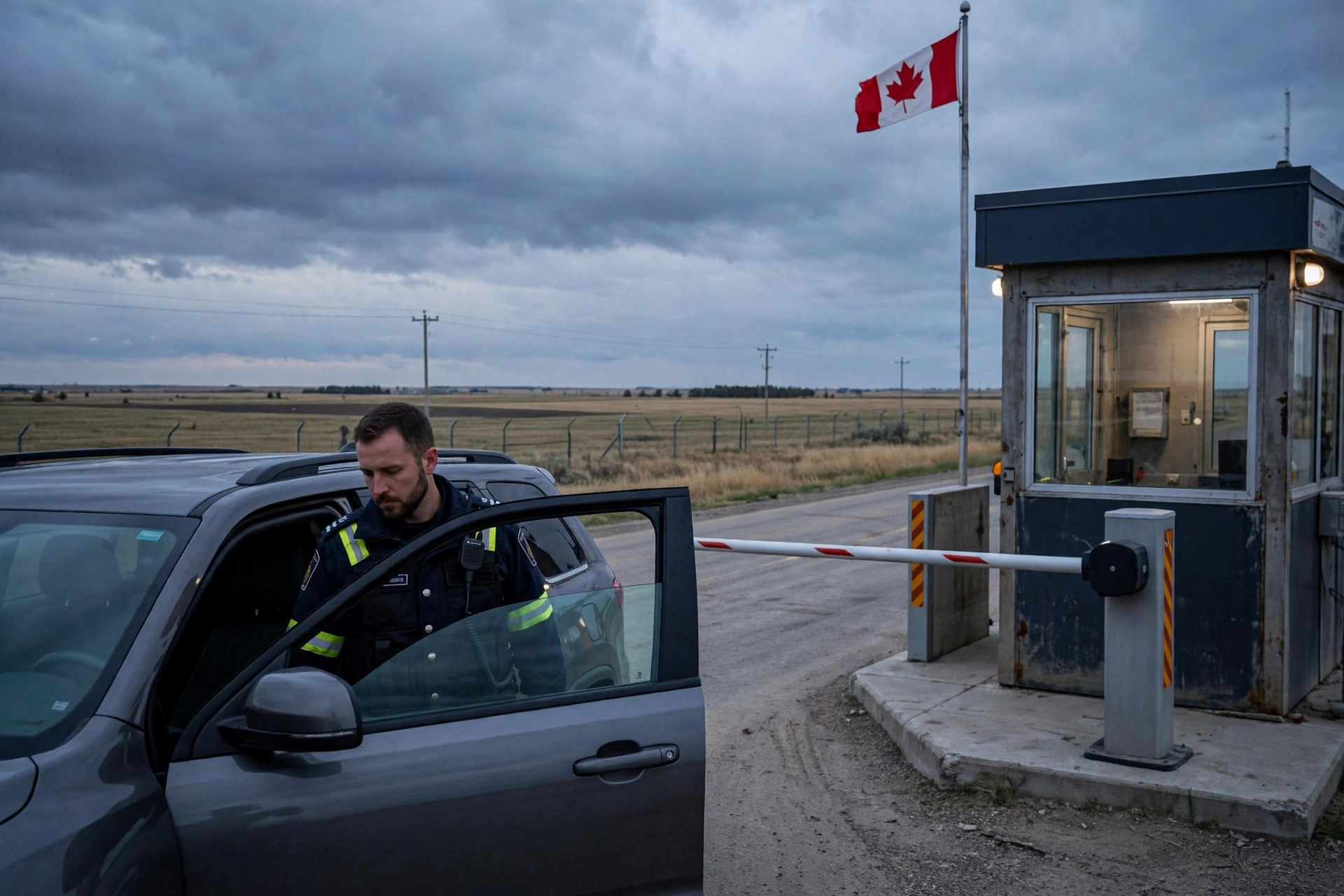
On May 7, 2026, a 50-year-old U.S. citizen named Annan Nigel Ferguson drove a minivan with U.S. licence plates into the Sprague port of entry in Manitoba. Border officers found inconsistencies in his declaration statement and searched the vehicle. In the trunk, they found a 46-year-old foreign national, Temitope Omofuyi Davies, hiding.
Davies told CBSA criminal investigators he had paid Ferguson US$1,000 to help him enter Canada illegally. Investigators found the money in Ferguson’s wallet. Davies had also been caught in March 2026 attempting to cross into Canada between ports of entry near Surrey, British Columbia.
Reach Newcomers to Canada
Banks, insurance, real estate, tax & accounting, telecom, healthcare & education. Ask about relevant native in-article placements.
Contact Us →Both men were arrested on the spot. Both were charged on May 8, 2026, and both remained in custody until they were sentenced.
On November 4, 2026, Ferguson was sentenced in Winnipeg Provincial Court to one year in prison after pleading guilty to aiding or abetting a failure to report, contrary to section 131 of the Immigration and Refugee Protection Act (IRPA). With credit for time already spent in custody, he has approximately three months left to serve.
Davies pleaded guilty on August 19, 2026, in Manitoba Provincial Court to failure to report, contrary to section 124 of IRPA. He was sentenced to time served — equivalent to 156 days in prison.
The Canada Border Services Agency announced the outcomes on November 12, 2026.
What the two charges actually mean
The two men were not charged with the same thing, and the difference matters.
Section 124 — failure to report. This is the charge Davies faced. Everyone entering Canada must report for examination. Section 124 makes it an offence to contravene a provision of the Act where no specific penalty is provided, or to fail to comply with a condition or obligation imposed under the legislation. Davies did not report. He hid instead. That is the offence.
Start your secure Immigration intake
Skip the back-and-forth. Complete a structured intake in 25 minutes. Reviewed by Dimple Verma, RCIC-IRB. No payment required to start.
Section 131 — aiding or abetting. This is the charge Ferguson faced, and it is the more serious one. Section 131 makes it an offence to knowingly induce, aid or abet another person to contravene specified provisions of the Act, including section 124. Ferguson did not just fail to report himself. He drove the vehicle, he hid the passenger, and he took $1,000 for it. The law treats the person who facilitates an illegal entry more harshly than the person who attempts it — and the sentences reflect that. One year for the driver. Time served for the passenger.
Why this case matters — and what it does not change
This case is not a policy change. No rule was amended, no program was closed, and no new enforcement power was created. What changed is nothing at all — and that is the point.
The rules that put these two men in prison have been in place for years. What the Sprague case shows is that they are being enforced, and that the consequences are real: months in custody before sentencing, a criminal record under the Immigration and Refugee Protection Act, and prison time after it.
Three things in particular are worth understanding:
A failed crossing does not just end with being turned back. Davies had already been caught once, in March, trying to cross between ports of entry near Surrey. He tried again in May — this time hidden in a trunk, with a paid driver. The second attempt ended in arrest, months in custody, a guilty plea and a prison sentence. Each attempt makes the next one worse, because the record follows you.
Paying someone does not buy a legal entry. A thousand dollars bought Davies a ride in a trunk and a criminal charge. There is no payment, no driver and no shortcut that turns an illegal entry into a legal one. The only lawful way to enter Canada is to report for examination at a port of entry and be admitted — or to hold valid status and documents.
The driver’s risk is greater than the passenger’s. Anyone asked to drive, hide or help someone cross illegally should understand section 131 before they agree. The person who facilitates the entry faces the heavier charge and the longer sentence. A favour for a friend, or a thousand dollars from a stranger, can mean a year in prison.
The CBSA’s release does not say whether Davies received a removal order, whether he made a refugee claim, or what further immigration proceedings, if any, may follow. Those questions are still open, and they matter — a criminal conviction under IRPA can affect admissibility, refugee protection and future applications. But the criminal outcome itself is settled: two guilty pleas, two prison sentences.
The practical takeaway
If you are outside Canada and want to come here, do it through a lawful route — a visa, a work permit, a study permit, a refugee claim made properly, or a sponsorship. If you are already in Canada and your status is uncertain, get advice before you do anything that could make it worse. And if someone offers to get you across the border for cash, hidden in a vehicle, understand what you are being offered: not a shortcut, but a criminal offence — for you, and a worse one for the person driving.
How VG Immigration Services can help
If you are worried about your status in Canada, have been refused entry, or need a lawful route to come to or stay in Canada, book a consultation at vgis.ca or message us on WhatsApp at 416-578-9269. We will review your situation honestly and help you find the legal pathway that fits — before a bad decision turns into a criminal record.
This post is general information only and is not legal advice. The facts are as stated in the Canada Border Services Agency’s news release of November 12, 2026. Court outcomes and immigration consequences depend on the specific facts of each case.